
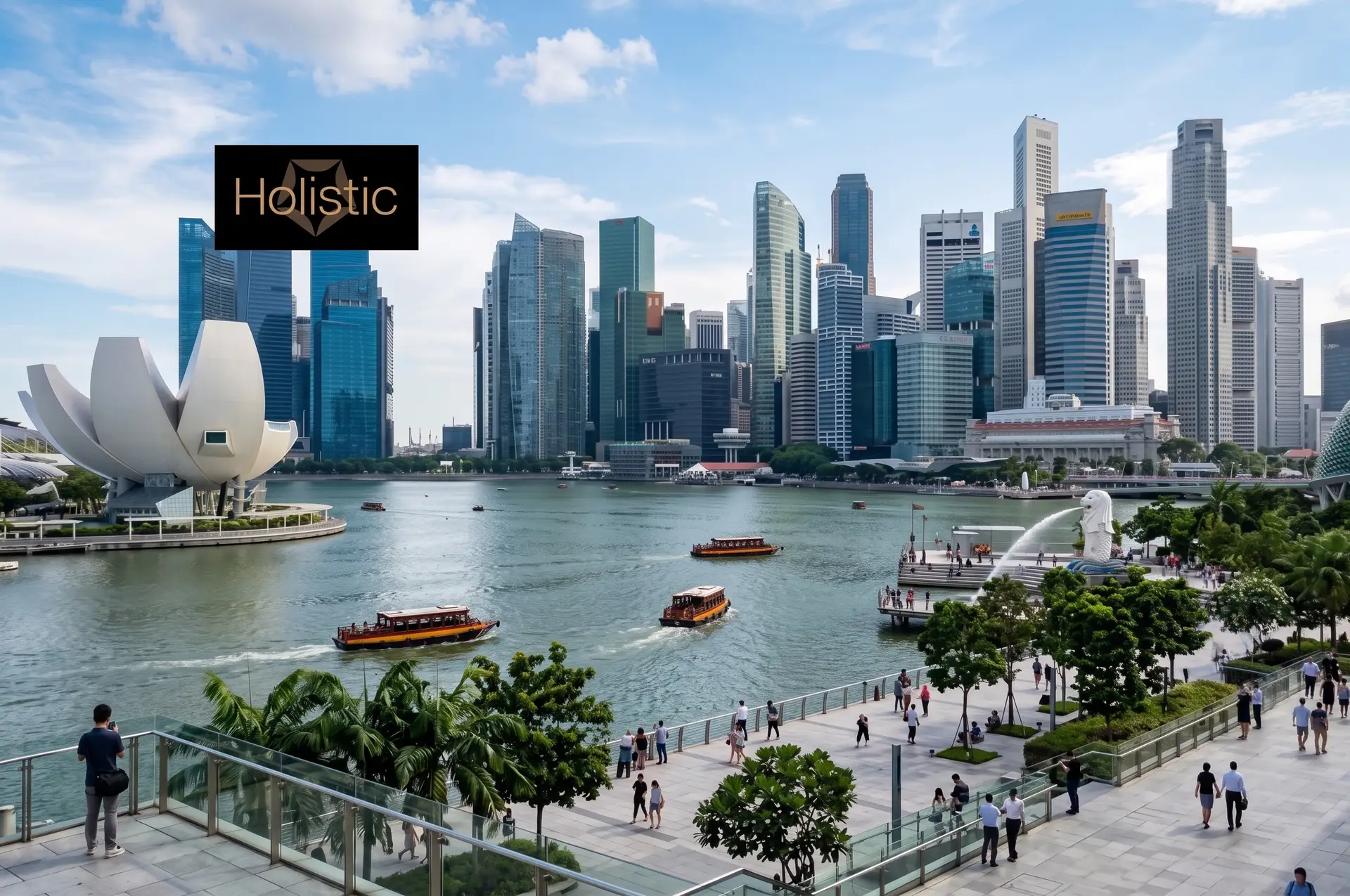
Singapore has long been recognised as a premier global hub for innovation, commerce, and finance, making it incredibly appealing to founders worldwide. When considering expansion, a primary question arises: can a foreigner start a business in Singapore? The answer is a resounding “yes!” It is absolutely possible for a foreigner to register a company in Singapore.
The nation’s pro-business environment, strategic geographic location, transparent tax ecosystem, and world-class infrastructure make starting a business in Singapore as a foreigner a potentially highly lucrative move.
However, navigating the local regulatory framework successfully requires a deep understanding of Singapore’s strict legal compliance guidelines. Maintaining absolute regulatory compliance prevents operational friction and shields your business from costly statutory penalties.
Intrigued? Read on and learn everything you need to know about starting a business in Singapore as a foreigner, including the things you need to prepare when starting a business in Singapore, types of company structures to choose from, how to register a company in Singapore for foreigners, and more.
Can a Foreigner Start a Business in Singapore?

Yes—the answer to the question “Can a foreigner start a business in Singapore?” is a resounding yes. In fact, it is a highly streamlined and widely supported process.
For the uninitiated, the Singapore government actively encourages global talent, international investment, and cross-border innovation.
Work Visa Requirements for Foreign Entrepreneurs
To actively manage your enterprise on the ground, you must secure an appropriate work pass from the Ministry of Manpower (MOM). The two primary pathways to setting up a company in Singapore as a foreigner are:
- Employment Pass (EP): Aimed at key executives and high-calibre professionals. You can incorporate a Private Limited company first, then have the company sponsor your EP.
- EntrePass: Specially designed for serial entrepreneurs, innovators, or venture-backed founders looking to introduce deep tech or scalable intellectual property to Singapore.
Appointing a Resident Director and Corporate Secretary
Singapore company law mandates specific corporate roles that must be filled before or immediately following incorporation:
- Local Resident Director: Starting a business in Singapore requires at least one ordinary resident director. This individual must be a Singapore Citizen, a Singapore Permanent Resident (PR), or a valid holder of an eligible Employment Pass. Failing this local residency metric is the single most common roadblock for cross-border setups.
- Company Secretary: You must appoint a qualified, local resident company secretary within 6 months of incorporation. Leaving this seat empty constitutes a severe legal breach.
5 Steps to Starting a Business in Singapore as a Foreigner

Learning how to start a business in Singapore as a foreigner requires following the five clear corporate developmental milestones.
Step 1: Research and Planning
Long-term B2B or B2C success requires extensive preparation before registering your company profile:
- Identifying the Right Business Idea: Align your international product or service with local market gaps.
- Understanding Market Dynamics: Assess purchasing power, regional trade access, local vendor availability, and commercial real estate costs.
- Analysing Competitors: Evaluate dominant industry players to form an impactful, unique value proposition (UVP).
Step 2: Choose From the Types of Business Entities for Foreigners
Selecting the right business vehicle is a vital foundation for legal protection, tax planning, and funding scalability. Lenders and investors prioritise certain structures over others when assessing corporate strength.
- Private Limited Company (Pte Ltd): The gold standard for commercial structures. It functions as a separate legal entity from its shareholders, providing limited liability protection for personal assets. This structure is highly favoured by capital providers and is eligible for the flexible business financing solutions, such as business term loans.
- Sole Proprietorship: A structure owned and managed by a single individual, where the owner and the firm are legally identical. It carries unlimited personal liability, exposing personal assets to business debts. Check out the full breakdown on our Sole Proprietorship Registration Guide.
- Limited Partnership (LP): A flexible structure comprising at least one general partner (with unlimited liability) and one limited partner (whose liability is restricted to their investment capital).
- Limited Liability Partnership (LLP): A hybrid entity blending partnership flexibility with corporate limited liability features. It is heavily utilised by professional services such as legal firms, medical groups, and accounting firms.
| Private Limited Company (Pte Ltd) | Sole Proprietorship | Limited Liability Partnership (LLP) | |
| Legal Status | Separate legal entity | No separation; owner is the business | Separate legal entity |
| Liability | Limited to share capital | Unlimited personal liability | Limited to partnership stakes |
| Tax Treatment | Corporate Tax Rates (8.5%–17%) | Individual Income Tax Rates (0%–24%) | Partners taxed individually |
| Financing Ease | Excellent access to alternative & bank loans | Extremely difficult to raise capital | Moderate access from select firms |
Step 3: Business Registration in Singapore
All corporate filings are processed digitally via BizFile, the digital trade network overseen by the Accounting and Corporate Regulatory Authority (ACRA).
Step-by-Step Company Registration
- Business Name Reservation: Your proposed name must be unique, non-offensive, and free of existing trademark infringements.
- Appoint Core Officers: Record your resident directors, shareholders, and corporate secretary profiles.
- Establish a Registered Office Address: You must maintain a valid physical commercial or residential address within Singapore to handle official correspondence. Post Office boxes are legally rejected.
- Determine SSIC Codes: Select the appropriate Singapore Standard Industrial Classification (SSIC) codes matching your core commercial activities.
For an in-depth breakdown, read the complete roadmap on How to Register a Company in Singapore.
Documentation and Timeframes
Foreign operators must provide notarised passports, proof of overseas residential addresses, and corporate bank reference statements. If structural information is properly prepared, name reservation takes under an hour, and full corporate approval is completed within 1 to 3 working days. Name reservation fees cost S$15, and private limited incorporation costs S$300, making the total sum payable S$315.
Step 4: Opening a Corporate Bank Account in Singapore

To maintain precise asset segregation, your business must secure a separate operating corporate account immediately following incorporation.
Requirements and Account Selection
Most major institutions require the physical presence of directors and authorised signatories during corporate onboarding.
Required paperwork includes approved ACRA business profiles, constitution briefs, and identification documents.
How to decide on the best corporate bank accounts? Compare account minimum balances, monthly fallback fees, and cross-border multi-currency transfer costs before committing. It pays to protect your transactional flexibility!
Step 5: Additional Considerations
- Immigration & Hiring: Build a balanced workforce strategy. While work passes allow you to bring in specialised international leaders, you must respect the fair consideration framework and tap into local Singapore talent to build balanced long-term operations.
- Specialised Business Licences: Certain high-growth industries require secondary operational approvals before trading commences. F&B spaces require Singapore Food Agency (SFA) licences; tuition centres need Ministry of Education (MOE) approvals; construction companies must navigate Building and Construction Authority (BCA) tiers; and fintech platforms require Monetary Authority of Singapore (MAS) clearance.
- Networking: Build strong local connections by engaging with international chambers of commerce, Enterprise Singapore networks, and industry associations to anchor your market position.
Conclusion: Starting a Business in Singapore as a Foreigner
Learning how to start a business in Singapore requires balancing a clear business vision with careful adherence to regulations. By prioritising a robust Private Limited structure, appointing your resident officers properly, and respecting annual compliance steps, you can position your enterprise for rapid international growth even if you’re a foreign entrepreneur who’s new to starting a business in Singapore.
And as much as we hate it, unpredictable capital gaps can arise while setting up inventory pipelines, handling office fit-outs, or managing early payroll cycles. As an established SME loan provider, Holistic Enterprise helps modern firms solve cash flow friction through transparent, collateral-free SME loans.
Whether you need a flexible Working Capital Loan to protect your day-to-day operations or an agile Business Expansion Loan to enter new markets, we provide the capital necessary to propel your venture forward, and our loans offer swift processing in just 1–2 working days.
Contact our professional consultants today or apply online to fuel your company’s growth after you’ve done the legwork starting a business in Singapore as a foreigner!
Related Articles
- Your Complete Guide to Business Loans for Startup Companies: Learn how early-stage ventures can access alternative financing without long traditional banking wait times.
- 5 Pitfalls F&B Businesses in Singapore Face & How to Mitigate: Avoid common operational traps regarding supply chains, licensing delays, and labour crunches in Singapore’s competitive dining sector.
- 7 Types of Leadership Styles & Which Suits Your Singapore SME: Discover impact-driven management frameworks to build elite teams and optimise employee retention.
